

When it comes to protecting yourself from mosquito bites while travelling, choosing the right insect repellent is essential. But with so many options on the market—some with DEET, some without—it can be hard to know which is best for your needs.
In this guide, we break down the key differences between DEET and non-DEET repellents, and help you decide which one is right for your next adventure or even for gardening in Ireland during the summer months!
What is DEET?
DEET (N,N-Diethyl-meta-toluamide) is a synthetic chemical that’s been used as an insect repellent for over 70 years. It’s considered the gold standard in mosquito protection and is highly effective at preventing bites from mosquitoes, ticks, and other insects that can carry diseases such as malaria, Zika, and dengue fever.
What Are Non-DEET Alternatives?
- Picaridin (also known as Icaridin) – A synthetic compound that’s just as effective as DEET but with a lighter feel.
- Oil of Lemon Eucalyptus (OLE or PMD) – A plant-based option offering moderate protection.
- IR3535 – Another synthetic ingredient often found in European formulations.
- Essential oils (e.g. citronella, lemongrass) – Natural, but usually offer only short-term protection.
- TMB non-DEET repellents contain Saltidin 20% and Citrindiel 40%
Key Differences: DEET vs Non-DEET
| Feature | DEET | Non-DEET |
| Effectiveness | Up to 12 hours | 2–10 hours depending on ingredient |
| Best For | High-risk areas | Lower-risk areas, short outings |
| Skin feel | Oily, may damage plastics | Generally lighter and more skin-friendly |
| Safety | Safe for adults and kids over 2 months | Varies; some not suitable for young children |
| Reapplication | Less frequent | More frequent needed for some types |
TMB’s Trusted Insect Repellent Range
At Tropical Medical Bureau, we offer a carefully selected range of repellents to suit every traveller:
🧴 TMB Classic Insect Repellent: A tried and trusted DEET-based formula, ideal for most travel destinations. Offers long-lasting protection against mosquitoes and other biting insects. It has our highest DEET percentage at 49%
🧴 TMB Extreme Insect Repellent: Perfect for areas with a high risk of insect-borne disease. Whilst only 30%, DEET percentage, it is microencapsulated and has time release technology so is more suited to the extreme tropical areas
🧴 TMB Non-DEET Insect Repellent: Made using the natural repellent Citriodiol™ (Oil of Lemon Eucalyptus) it provides long-lasting protection for up to 10 hours. This plant-based formulation is DEET-Free and can be used on children from 6 months +
Which Repellent is Right for You?
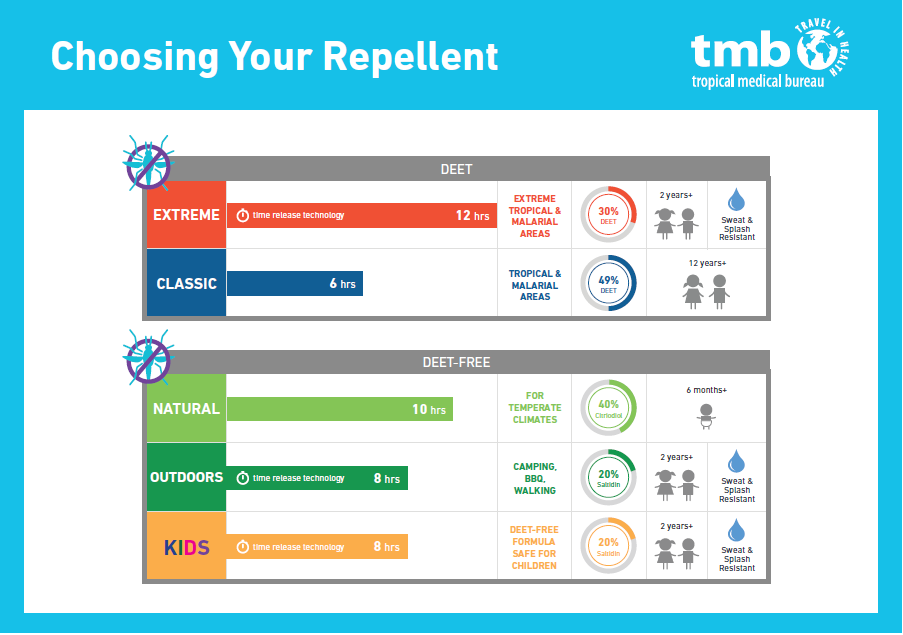
- Travelling to tropical or high-risk areas? Choose a DEET-based repellent like TMB Extreme.
- Spending time outdoors in Ireland or other low-risk countries? A lower-concentration option like TMB Outdoors is usually enough.
- Prefer a lighter feel or have sensitive skin? Consider a non-DEET repellent such as one with Citriodiol™.
Final Thoughts
Whether you go for a DEET or non-DEET repellent, the most important thing is to use it consistently and correctly. Apply to exposed skin, avoid spraying on eyes or broken skin, and always reapply as directed.
With the right insect repellent—like those available from TMB via our online store travelshop.ie —you can travel with peace of mind, knowing you’re well protected.