
Whether you’re young or old, travelling to exotic destinations or just popping out to your back garden – it’s super important to consider the different types of insect repellent. Because, let’s face it, who likes itchy insect bites?
So, don’t let insects put a dampener on your summer and read on to hear all about how to choose insect repellent based on your needs.
DEET
DEET has been used as an effective insect repellent since it was invented in the 1940’s. DEET doesn’t harm insects, rather it just deters them by blocking the neurons and receptors that insects use to locate humans.
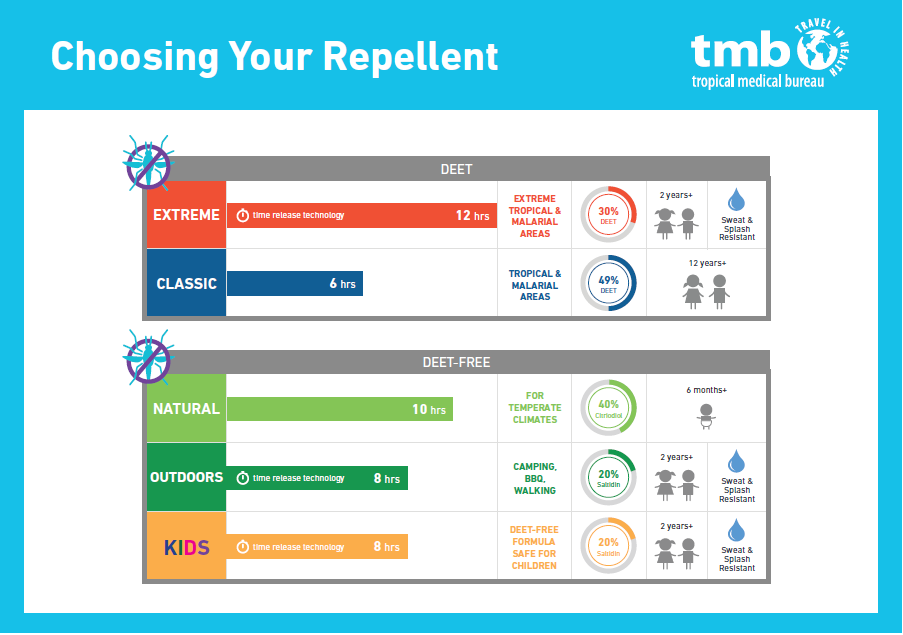
The rule is that the higher the DEET concentration in your repellent product the longer your protection.
TMB Extreme is ideal for extreme tropical conditions and family travel. It contains 30% DEET as well as micro-encapsulated DEET which is released slowly over the period of wear – this reduces the amount that needs to be applied to the skin.
One application continues to be effective for up to 12 hours and it can be used on children from age 2+.
Non-DEET
People with sensitive skin or babies under six months, can use non-DEET insect repellent that relies on natural ingredients to deter insects.
However, you need to consider your location and level of activity before choosing a repellent.
TMB Outdoors contains 20% saltidin. This DEET-free insect repellent is an excellent broad spectrum repellent for outdoor enthusiasts, gardeners or anyone spending extended periods outdoors.
Made with micro encapsulated technology, saltidin is released slowly during the period of wear giving longer lasting protection than other repellents on the market.
Cream or lotion?
Choosing an insect repellent goes deeper than the ingredients in the product – the application is also super important.
Although not everyone likes the feeling of cream on a hot day, it’s a good source of protection as you can control where it’s going.
If you don’t like to use product on your skin, try out the Mosqui-Go Electric, a simple tablet form mosquito killer that gets to work the moment you slot it into a plug socket.
But remember – an application directly to your skin is always the most effective.
We hope you enjoyed our top tips on how to choose insect repellent!
For more travel health tips and advice call into your local TMB clinic and speak to one of our qualified professionals.